
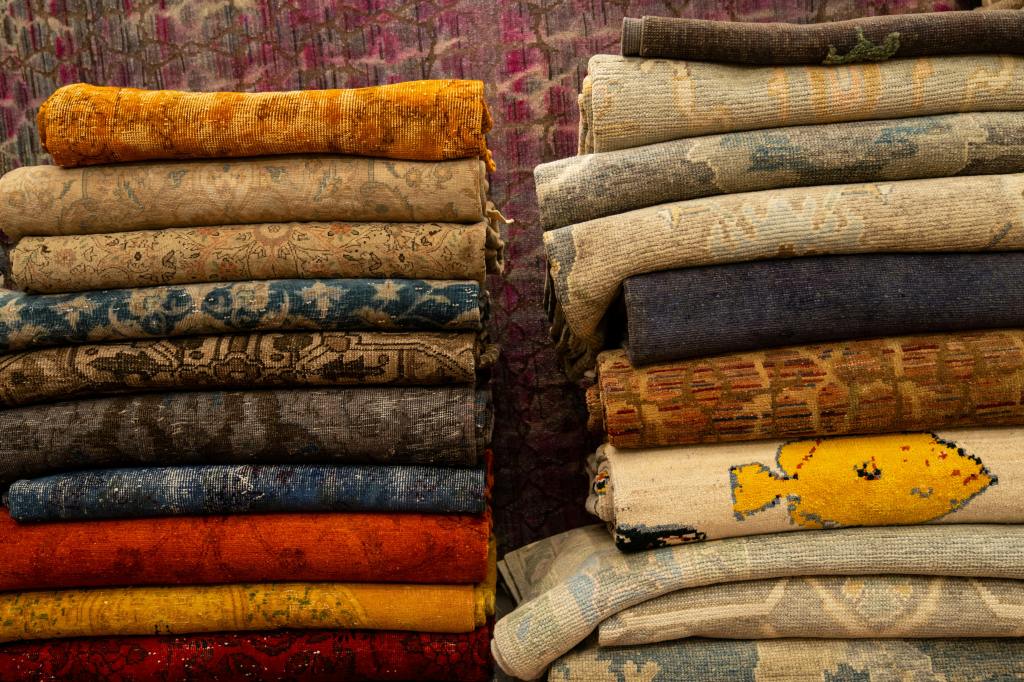
“To invent, you need a good imagination and a pile of junk.” – Thomas Edison
Engineering does not exist in a void. An engineer should not contain themself to one expression of design, as that will limit an engineer’s ability to think outside the box and apply strategies beyond the basics taught in school. I stretch my comfortable boundaries in the realm of art, with a specific focus in textiles.
Over this last summer, I taught myself how to make quilts. By August, I had narrowed my process down to a few defined steps.
First, I source the fabric. All of my fabric is second hand, primarily cotton bedding sets. Then, depending on the colors I source, I begin planning the style of the quilt. Finally, once I have a good idea of how much fabric I have, I choose the dimensions of the quilt and calculate how many pieces are required.
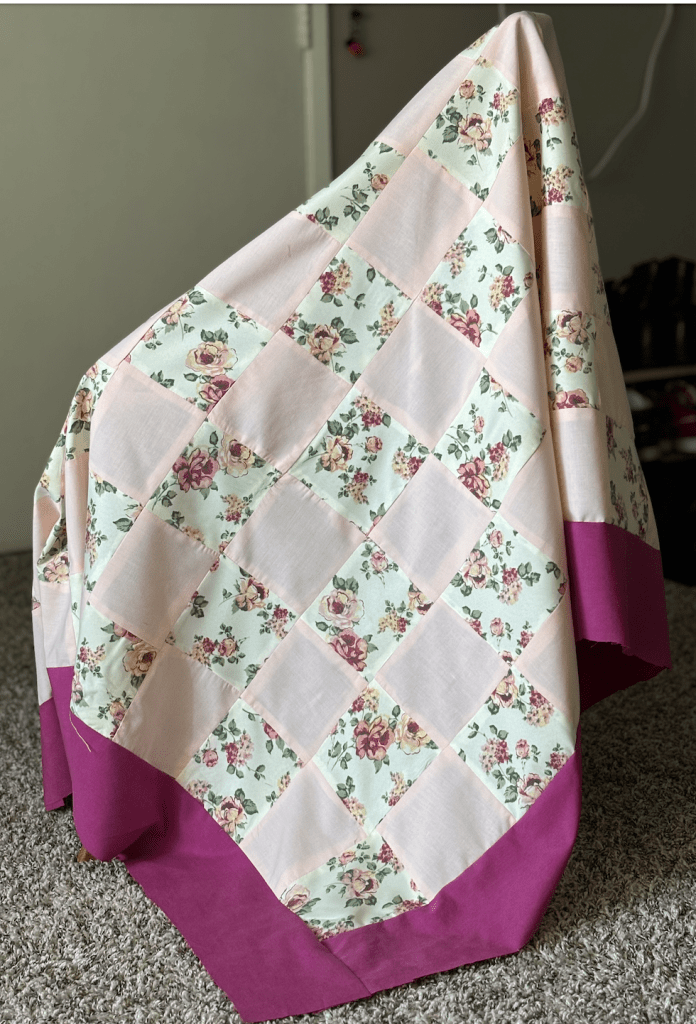
This image on the left is my first quilt, a simple, checkered design. It is made of two sheets and a dark pink pillowcase. This pink quilt is made up of seventy pink squares, seventy rose patterned squares, and eight strips of dark pink cotton. Each square is five by five inches, allowing for a quarter inch of overlap on all sides.
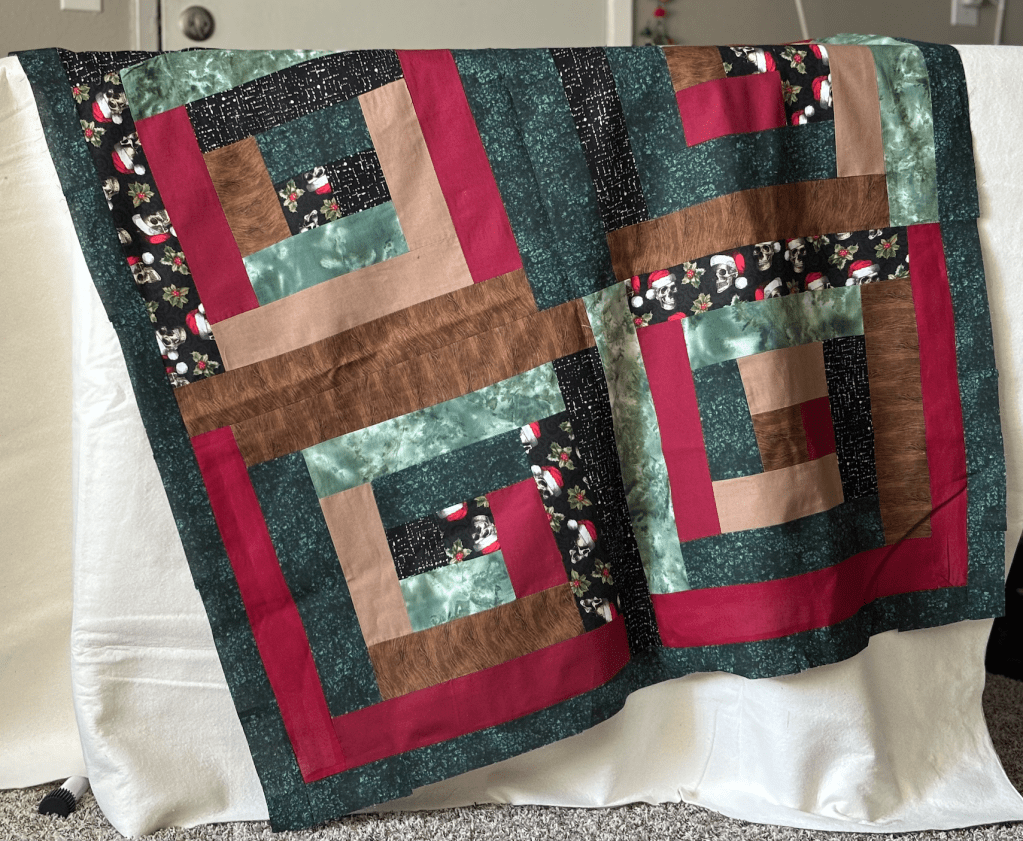
The outlet sewing provides is not a new one. I was first taught how to hand stitch and embroider by my grandmother, as a young elementary schooler. As a preteen, I took sewing classes at a local shop and learned how to operate a machine to produce usable results. The items pictured above and below are a culmination of the slow progress I have made through trial and error, with research bolstering each new attempt.
Creative outlets are a necessity for engineers. To have continuous progress, we must think beyond the equations and textbooks, and look at the tangible things around us for inspiration.
Additional Details on Photos
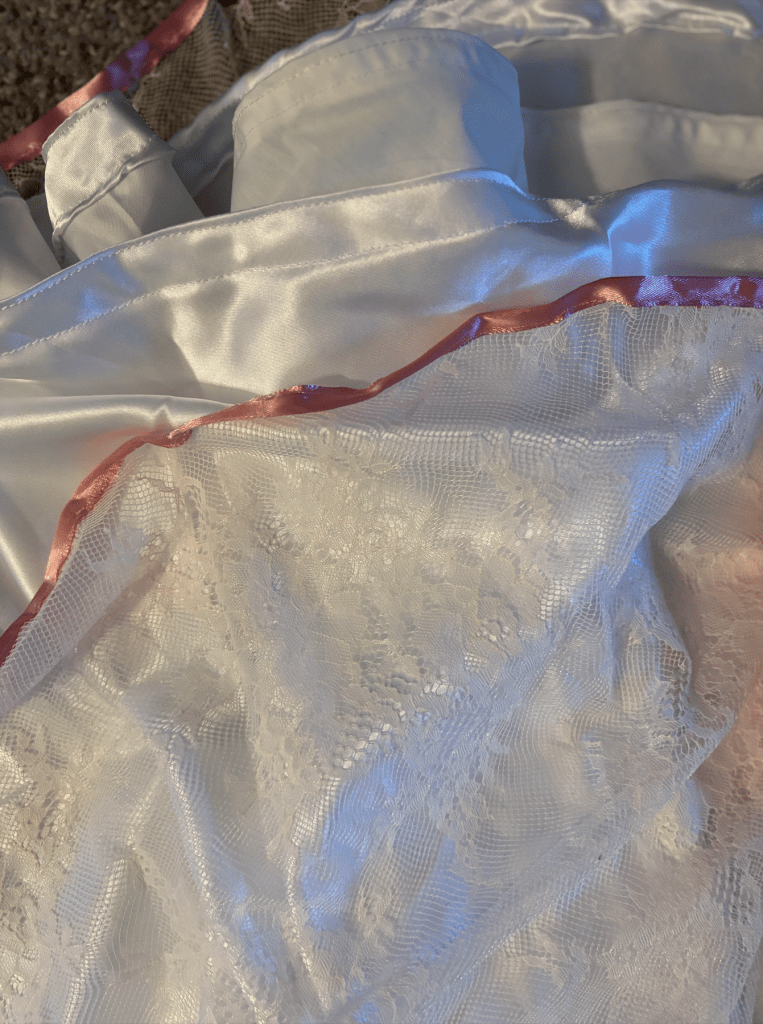
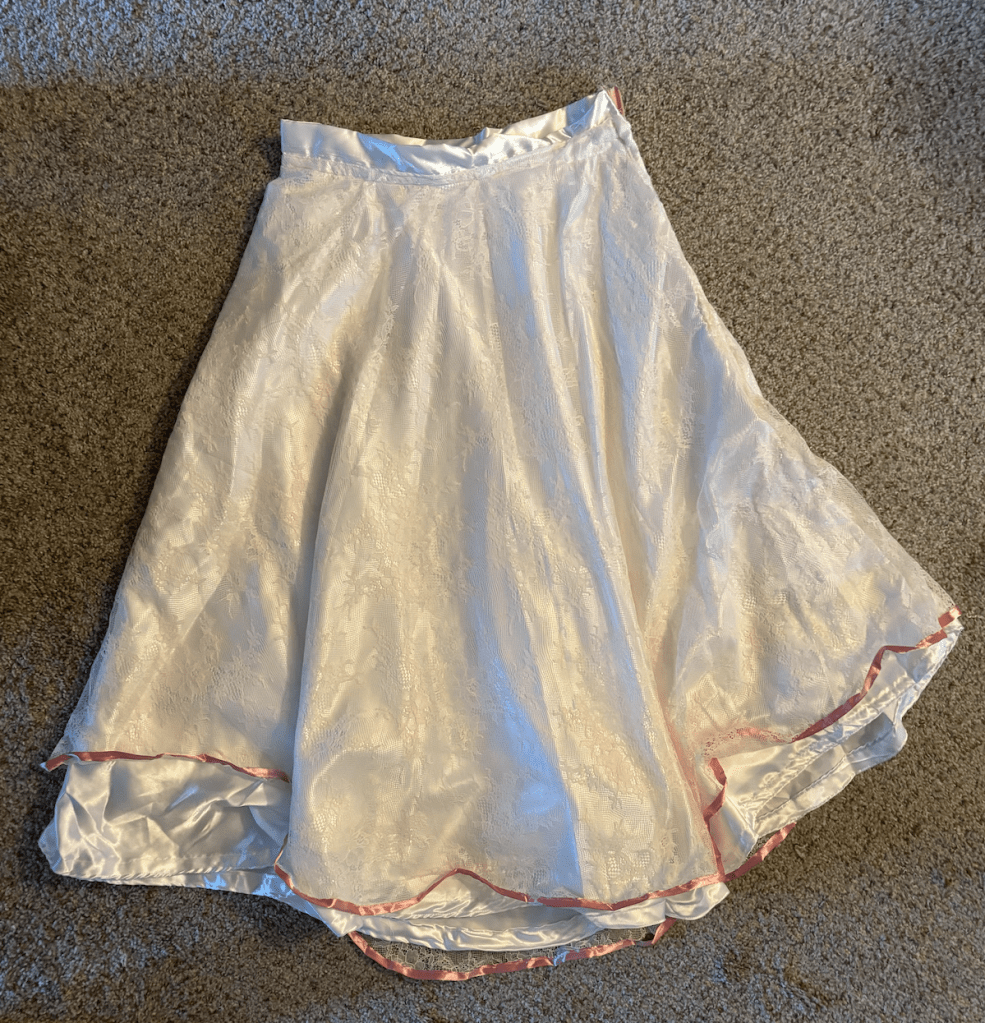
The pink and white skirt is the second article of clothing I have ever constructed. I did not follow a pattern; I investigated the strategies of self taught seamstresses for half circle skirts, measured and cut my pattern from layers of parchment paper, then cut the three layers of the skirt itself. The lace, edged with the dark pink ribbon, was hand dyed a very faint pink. It is only visible when layered over the bright white of the polyester blend of the skirt’s body. It has a functional zipper in the back and a stretchy waistband.
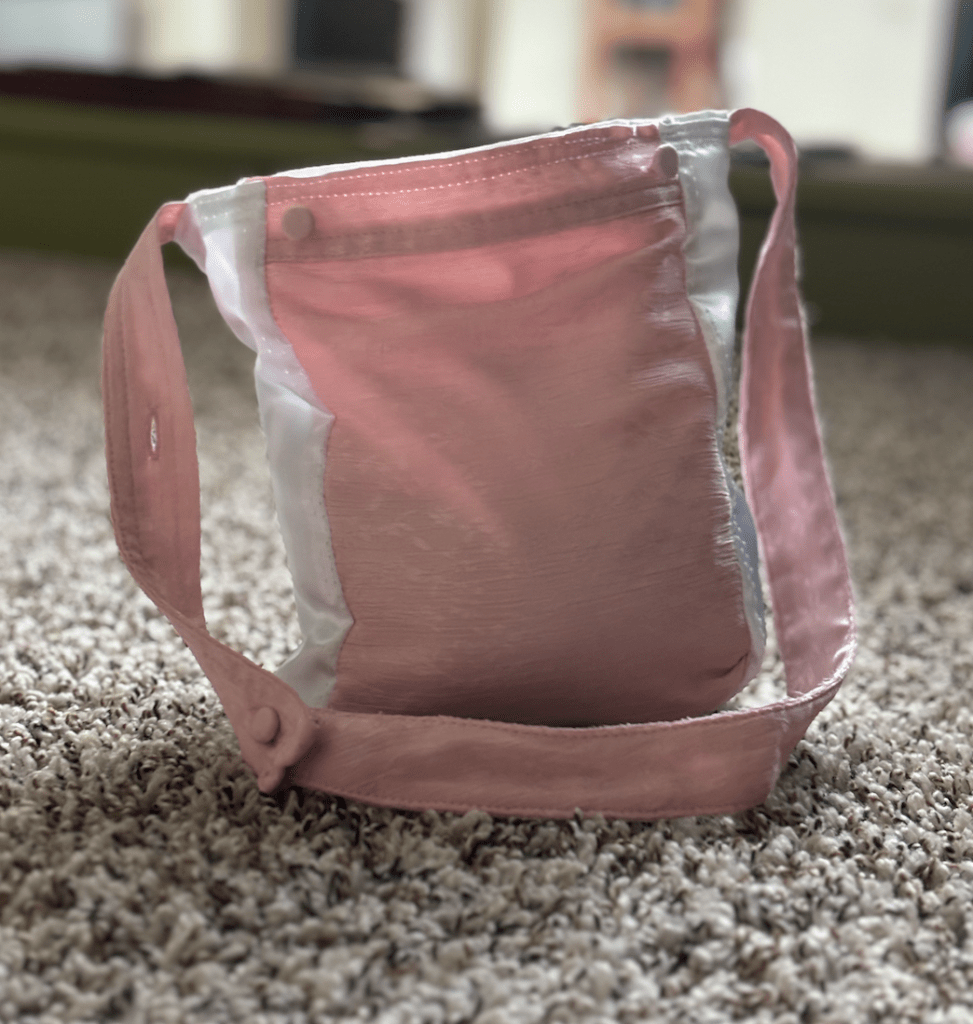
The pink and white bag is constructed from the scraps of a dress shirt and the remaining polyester blend used in the skirt. The interior is lined with 100% white cotton, which is much sturdier and holds stitches of all sizes very securely. The strap was purposely constructed from the skirt’s collar, to allow for button and unbuttoning, and for the strength of the layered fabric. This also serves as a fun reminder that the bag is a repurposed article of clothing.
 West Brownlow